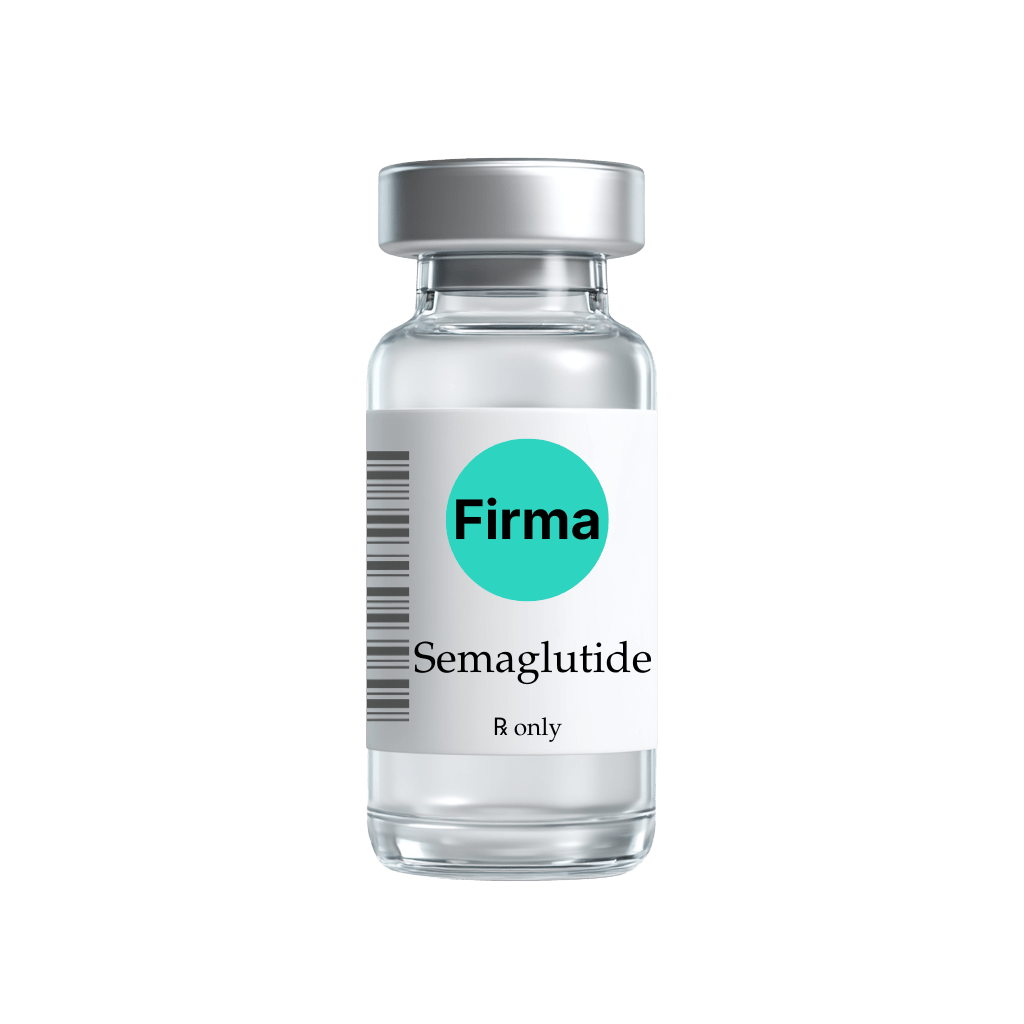
Semaglutide Injection
Delivered every 23 days. Cancel anytime.
$60.00
every 23 days
$60.00
$199.00
one-time purchase
About This Product
What's Included
- ✓ Semaglutide/B12 Combination Injection (0.25mg – 2.4mg)
- ✓ Syringes
- ✓ Alcohol Pads
- ✓ Physician Access
Dosage varies from 0.25mg to 2.4mg and is dependent on the month ordered.
Procedure
Subcutaneous (Sub-q) injection, self-administered in fatty abdominal area or thigh. Video tutorial provided after purchase.
Purpose
Semaglutide Injection is a once-a-week dose that works by mimicking hormones that target areas of the brain involved in regulating appetite and food intake. This can help you eat less and lead to weight loss.
Our Semaglutide is combined with B12 for energy, sleep cycle regulation, and a better patient experience.
Dosing Schedule
Once a week — taken on the same day each week, any time of day, with or without food. Detailed dosing schedule will be provided with the Homekit.
Diet and Exercise
Healthy eating and activity are recommended.
Benefits
- Weight Loss
- May improve Blood Pressure
- May improve Cholesterol
- Improves Blood Sugar
Most Common Side Effect
Nausea
Recommendations to limit Nausea: Eat bland, low-fat foods, like crackers, toast and rice. Eat foods that contain water, like soup and gelatin. Avoid laying down after eating. Eat slowly. Go outdoors for fresh air.
Physician Consent for Treatment: A physician may contact you within 24 hours of purchase if additional information is needed.
Important — Titration Schedule
This product follows a titration schedule. All patients must start with the Month 1 dose. After Month 1, the dosage per injection increases gradually in Month 2, 3, and 4. The maintenance dose can be ongoing for up to 8 months depending on your goals.
A minimum BMI of 27 or greater is required to order this product.
Shipping
This product can be shipped 2-Day or Overnight and does not need to be refrigerated during shipping. As a precaution, please refrigerate once received and opened.
The Science Behind Semaglutide
What is Semaglutide?
Semaglutide is an incretin mimetic — specifically, a GLP-1 receptor agonist with 94% sequence homology to human GLP-1. Semaglutide binds and activates the GLP-1 receptor. GLP-1 is an important, gut-derived, glucose homeostasis regulator that is released after the oral ingestion of carbohydrates or fats.
In patients with Type 2 diabetes, GLP-1 concentrations are decreased in response to an oral glucose load. GLP-1 enhances insulin secretion, increases glucose-dependent insulin synthesis, suppresses glucagon secretion, slows gastric emptying, reduces food intake, and promotes beta-cell proliferation. The principal mechanism of protraction resulting in the long half-life of semaglutide is albumin binding, which results in decreased renal clearance and protection from metabolic degradation; semaglutide is stabilized against degradation by the DPP-4 enzyme.
Semaglutide reduces blood glucose by stimulating insulin secretion and lowering glucagon secretion — both in a glucose-dependent manner. When blood glucose is high, insulin secretion is stimulated and glucagon secretion is inhibited. The mechanism also involves a minor delay in gastric emptying in the early postprandial phase.
Why B12?
Vitamin B12 deficiency may result from any of the following conditions:
- Addisonian (pernicious) anemia — autoantibody formation against parietal cells, resulting in a lack of intrinsic factor essential for B12 absorption
- Malabsorption — impaired absorption of vitamin B12
- Gastrointestinal pathology, dysfunction, or surgery — including atrophic gastritis, celiac disease, small bowel bacterial overgrowth, pancreatic insufficiency, H. pylori infection, gastric carcinoma, and total or partial gastrectomy
- Diphyllobothrium latum infestation — these parasites compete with vitamin B12 for intestinal absorption
- Certain medications — long term metformin use and chronic acid-reducing drugs decrease the absorption of vitamin B12 from food
- Malignancy of the pancreas or bowel
- Folic acid deficiency